
The F Major Chord Made Easy for Beginner Guitarists
Master the F major chord with ease! Discover essential finger placement tips, avoid common mistakes, and learn pro hacks for a clear sound. Start playing today!
magicchords.com
2/12/2026


Struggling with the F major chord? Don't give up! Our guide simplifies this challenging barre chord with easy techniques, pro tips, and essential exercises to help you play crystal-clear notes.
Mastering the F major chord is often seen as the ultimate "rite of passage" for every aspiring guitarist. You’ve likely mastered the open chords like G, C, and D, but then you encounter the F major, and suddenly, the strings start buzzing, your hand cramps, and the music stops. Don't worry—you aren’t alone. This specific chord is notorious for being the first major hurdle because it introduces the barre technique, requiring your index finger to act as a physical bridge across the fretboard. It is the moment where physical strength meets technical precision, and for many, it's where the real journey begins.


The secret to making the F major chord easy isn't about having superhuman hand strength; it’s about understanding the mechanics of your guitar and the anatomy of your hand. Many beginners fail because they try to "muscle" the notes, pressing down as hard as possible. In reality, success comes from the strategic placement of your thumb, the slight rotation of your index finger to use the bony edge rather than the soft pad, and the correct angle of your wrist. By shifting the focus from raw pressure to efficient leverage, you can achieve a crystal-clear tone without the frustration of muted strings or sore fingers.
The F major chord made easy - content:
1. F Major Chord: Your Guitar Playing’s Biggest Milestone
2. How the F Major Chord Transforms Your Sound
3. Finger Placement for a Crystal-Clear F Major Chord
4. Step-by-Step Guide to the F Major Chord
5. Common F Major Chord Mistakes and Instant Fixes
6. Why Every Beginner Must Master the F Major Chord
7. Pro Hacks to Learn the F Major Chord Easier
8. Strum the F Major Chord with Confidence
9. Smooth Transitions To and From the F Major Chord
In this comprehensive guide, we break down the F major chord into manageable steps that anyone can follow. We will explore "cheat" versions for those just starting out, as well as pro-level hacks to perfect the full barre shape. Beyond just finger placement, we’ll dive into the common pitfalls that hold students back and provide a clear roadmap for smooth transitions between chords. Mastering the F major chord doesn't just add one harmony to your repertoire—it unlocks the entire fretboard, giving you the freedom to play thousands of songs with confidence. Let’s turn that buzzing sound into a beautiful, ringing chord!


Useful advices for beginner guitar players 1: Learning new songs is one of the best ways to improve chord changes and overall rhythm control on guitar. As players expand their repertoire, they encounter shapes that challenge finger strength and accuracy. In the middle of many popular progressions, the F major chord often appears, requiring proper barre technique and steady pressure. Songs like Wrecking Ball chords by Miley Cyrus include this chord, making them great practice material for developing consistency. With repetition, transitions become smoother and cleaner. Over time, mastering challenging chords builds confidence, improves tone quality, and strengthens overall musical performance skills.
F Major Chord: Your Guitar Playing’s Biggest Milestone
The F major chord is widely regarded as the ultimate "rite of passage" for every aspiring guitarist. While open chords like G, C major chord, and D major feel like welcoming milestones, the F major is the first true wall many players hit. However, this chord is not just a difficult shape to master; it is the fundamental gateway to professional guitar playing and the key to unlocking the entire fretboard. The significance of the F major chord lies in its introduction of the barre technique. By requiring the index finger to press down multiple strings simultaneously, it demands a level of finger strength and structural precision that open chords do not. Mastering this requires more than raw power—it necessitates an understanding of leverage, thumb positioning, and the subtle rotation of the wrist. Once a student can produce a crystal-clear F major chord, they have effectively learned the "E-shape" barre chord. This means they can now play any major chord across the neck simply by sliding that same shape to different frets.
Beyond the physical challenge, the F major chord represents harmonic liberation. Most beginners are stuck in the "safe" keys of G or C major. The F major chord is the missing link that allows a player to bridge these keys and venture into more complex musical territories, such as F major or D minor. It provides the depth and tension necessary for professional songwriting and soulful accompaniment.
Ultimately, the F major chord is the point where a hobbyist becomes a guitar player. It transforms the way you view the neck—no longer as a series of isolated spots, but as a cohesive system of movable patterns. Conquering the F major is proof of persistence, and once that sound rings out clearly, the path to mastery is wide open.
How the F Major Chord Transforms Your Sound
The F major chord is far more than a technical hurdle; it is a sonic catalyst that fundamentally alters the texture and depth of your guitar playing. In the early stages of learning, most guitarists rely heavily on open chords. While these are bright and resonant, they often sound "polite" or predictable. The introduction of the F major chord—specifically in its full barre form—brings a professional, punchy, and compressed quality to your music that open chords simply cannot replicate.
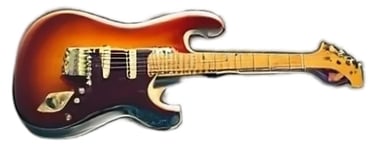
The transformation begins with tonal balance. Because the F major barre chord requires you to fret all six strings, you gain total control over the resonance. Unlike open chords, where unfretted strings may ring out uncontrollably, the F major allows for precise muting and rhythmic "chugging." This makes your sound tighter and more percussive, which is essential for genres ranging from funk and reggae to hard rock.
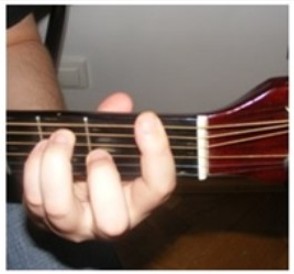
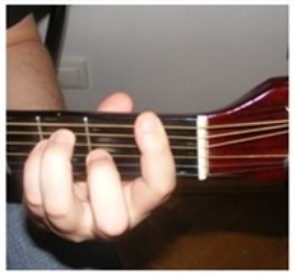
The F major chord introduces harmonic richness by grounding the music in a lower register. On a standard acoustic or electric guitar, the low F on the first fret of the E-string provides a thick, foundational bass note that adds "meat" to your progressions. It bridges the gap between the airy sounds of a C major and the darker tones of minor keys. By mastering this chord, you stop playing "at" the guitar and start playing "through" it, utilizing the instrument’s full frequency range. It is the sound of a musician moving from simple folk strumming to authoritative, intentional performance.
Finger Placement for a Crystal-Clear F Major Chord
Achieving a crystal-clear F major chord is the first true test of a guitarist's technical precision. The dreaded "buzzing" or "muted" strings usually occur not because of a lack of strength, but due to micro-adjustments in finger placement. To master this chord, you must treat your hand like a finely tuned machine, focusing on leverage rather than raw pressure. The foundation is the index finger barre. Instead of laying the pad of your finger flat across the strings, rotate it slightly toward the headstock. This allows the firmer, bony side of your finger to press the strings, ensuring they make solid contact with the fret. Position this finger as close to the first fret wire as possible without being on top of it; the closer you are to the metal, the less pressure you need to produce a clean tone.
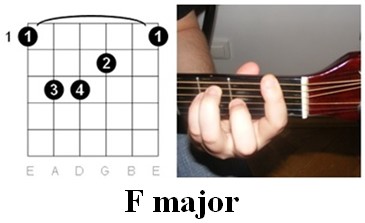
Next, focus on the arch of the remaining fingers. Your middle, ring, and pinky fingers must form high "bridges" over the strings. If these fingers flatten out, they will accidentally mute the adjacent strings, leading to a dull, thumping sound. Ensure your thumb is positioned squarely in the middle of the back of the neck, providing a solid counter-pressure for your fingers. Finally, check the "hidden" notes. Often, the third (G) or second (B) strings are the culprits of a bad sound. By slightly pulling your elbow closer to your body, you create natural leverage that helps the index finger clamp down more effectively. With these adjustments, the F major chord transforms from a frustrating struggle into a resonant, professional-sounding chord.
Step-by-Step Guide to the F Major Chord
Learning the F major chord is a systematic process that transforms a beginner’s technical approach to the guitar. To conquer this chord without frustration, you must follow a logical progression that builds both the necessary muscle memory and the correct hand geometry.
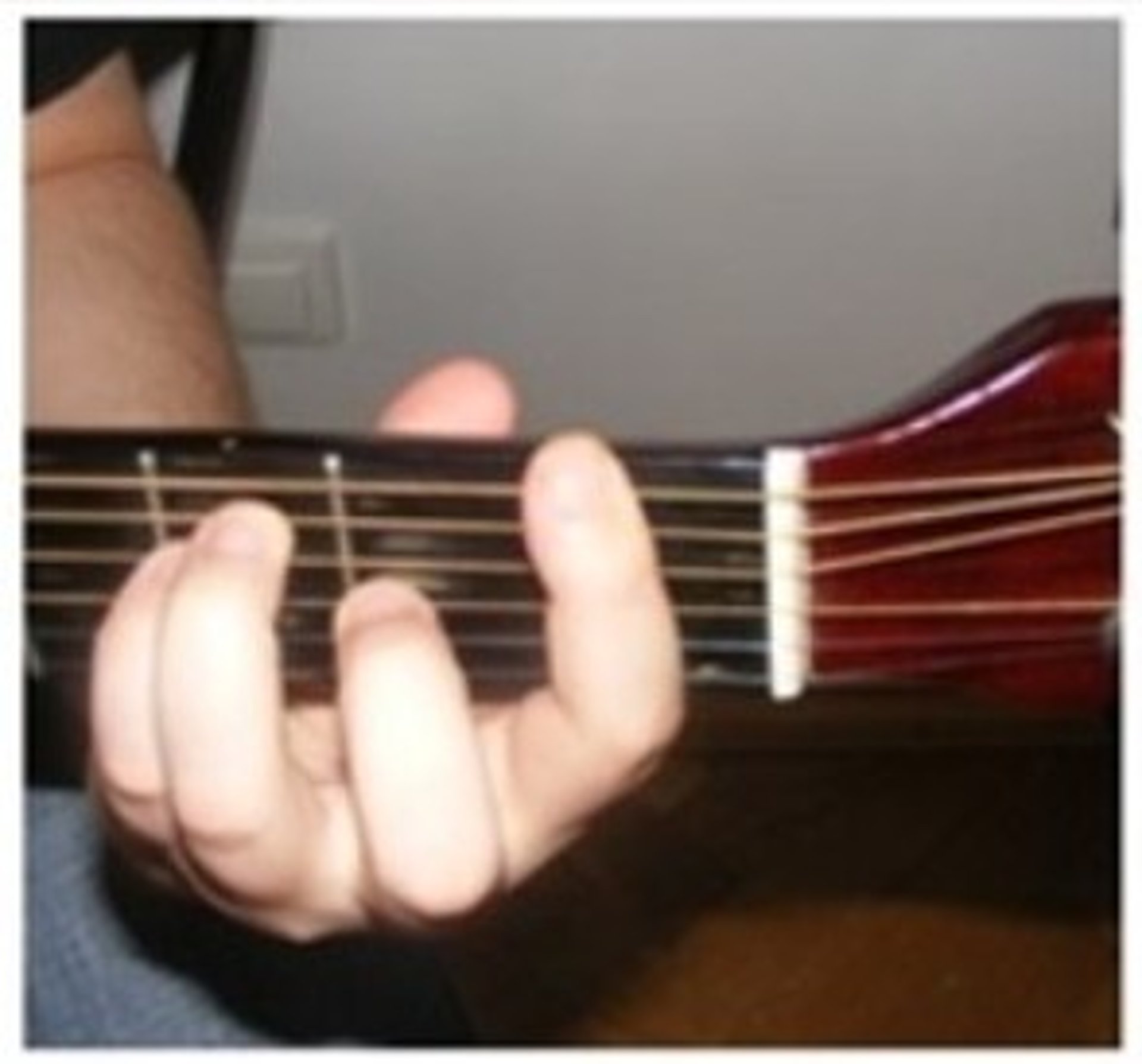
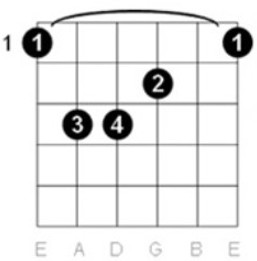
Step 1: The Foundation (Ring and Pinky) Begin by placing your ring finger on the 3rd fret of the A string and your pinky on the 3rd fret of the D string. This creates the "power chord" base. Ensure these fingers are arched high to avoid touching the G string. Step 2: The Middle Finger Place your middle finger on the 2nd fret of the G string. This is often the easiest part of the shape, but it’s crucial to keep it arched. At this point, you have the inner structure of the chord ready.

Step 3: The Barre (The Index Finger) The final, most challenging step is laying your index finger across all six strings at the 1st fret. Instead of pressing with the soft underside of your finger, rotate it slightly toward the nut to use the bony edge. This creates a firmer "capo" effect for the F major chord. Step 4: Thumb Placement and Leverage Position your thumb at the back of the neck, roughly opposite your middle finger. Instead of squeezing solely with your hand, pull your fretting-arm elbow slightly back toward your body. This uses the weight of your arm to help press the strings down. Step 5: The Strum Test Strum each string individually. If a string sounds dull or buzzes, adjust the angle of your fingers rather than just pressing harder. Once all strings ring clearly, you’ve successfully mastered the most important chord in a guitarist's journey.
Common F Major Chord Mistakes and Instant Fixes
The journey to mastering the F major chord is often paved with buzzing strings and tired hands. Most beginners encounter the same set of obstacles, but these issues are usually the result of minor mechanical errors rather than a lack of ability. Identifying these common mistakes is the first step toward an instant fix. The most frequent error is incorrect thumb positioning. Many players let their thumb "wrap" over the top of the neck or tilt it toward the headstock. This kills your leverage. The Fix: Move your thumb to the center of the back of the neck, directly behind your middle finger. This creates a "clamp" effect, making the barre much easier to hold with less effort.


Another common pitfall in playing the F major chord is using the flat part of the index finger. The underside of your finger is soft, which tends to absorb the strings rather than pressing them against the fret. The Fix: Rotate your index finger slightly onto its side (toward the headstock). The bony edge of the finger provides a much harder surface, which will instantly clear up those muted "dead notes" on the B and E strings. Finally, many students suffer from "flat finger syndrome," where the middle, ring, or pinky fingers collapse and touch adjacent strings. The Fix: Ensure you are playing on the very tips of these fingers. If you see deep vertical grooves in your fingertips after playing, you’re doing it right. By combining proper thumb support, finger rotation, and high arches, you can eliminate the buzz and achieve a professional sound today.
Why Every Beginner Must Learn the F Major Chord
The F major chord is often the first significant hurdle a guitar student encounters, but it is also the most rewarding. Avoiding this chord limits you to a handful of "safe" keys, but mastering it unlocks the door to thousands of songs and professional-level playing. Every beginner must face this challenge because it introduces the mechanics of the bar technique, which is the foundation of intermediate guitar. Learning the F major chord forces you to develop finger independence and hand strength. Unlike open chords that allow for some "sloppy" positioning, the F major demands precision.

It teaches you how to use your thumb for leverage and how to arch your fingers to avoid muting strings. These skills are transferable to every other chord you will ever play. The F major chord is the "key" to the fretboard. Once you can play this shape, you can move it up and down the neck to play any major chord—G, A, B, and beyond. It effectively ends your reliance on a capo and gives you the freedom to explore the entire instrument. By conquering the F major, you transition from a casual strummer to a serious musician ready for any musical challenge.
Pro Hacks to Learn the F Major Chord Easier
Mastering the F major chord doesn't have to be a grueling battle of strength. If you’re struggling with muted strings or hand fatigue, these professional hacks will help you bypass the common frustrations and achieve a clean sound much faster. The first "pro hack" is the Double-Stop Anchor. Instead of trying to squeeze the entire barre at once, focus on the "mini" version first. Place your index finger only across the high E and B strings at the first fret. Once those two notes ring clearly, add the rest of the shape. This builds the specific localized strength needed for the most difficult part of the F major chord without overwhelming your hand.


Another game-changer is The Gravity Trick. Most beginners try to "pinch" the neck with only their hand muscles. Pros use the weight of their fretting arm. By pulling your elbow slightly back and into your body, you use the large muscles of your shoulder and arm to pull the strings against the frets. This provides massive amounts of pressure with almost zero extra effort from your thumb. Lastly, check your Nut Action. If the strings on your guitar sit too high at the nut (the white piece near the headstock), the F major chord will be physically impossible to play cleanly. Try placing a capo on the first fret; if the chord suddenly feels 100% easier, it’s time to take your guitar to a shop for a setup. Using these hacks ensures your practice is about technique, not just struggling against your instrument.
Useful advices for beginner guitar players 2: Improving rhythm guitar skills requires control, precision, and attention to dynamics. As players grow more comfortable with chord progressions, they begin experimenting with texture and groove. In the middle of many modern styles, guitar palm mute techniques add punch and tightness to strumming patterns, creating a more focused and percussive sound. Practicing this approach helps develop better right-hand control and timing accuracy. Over time, combining open strums with muted strokes allows guitarists to shape energy levels, making performances more expressive and rhythmically engaging across different genres.
Strum the F Major Chord with Confidence
Once you have the finger placement down, the next hurdle is learning to strum the F major chord with authority. Many beginners hesitate when they see an F major chord in a song, leading to a weak or "tentative" strum that highlights buzzing rather than hiding it. To play with confidence, you must commit to the stroke. The key to a confident sound is rhythmic consistency. Even if one string is slightly muted, a strong, rhythmic downstroke will keep the momentum of the song going. Focus on hitting the low F string (the 1st fret of the thickest string) clearly. This provides the "bass" foundation that defines the chord's character.

If the bass note is solid, the listener’s ear will often fill in the rest of the harmony, even if the higher strings aren't perfect yet. Another confidence-builder is dynamic control. Practice strumming the F major chord softly, then gradually increasing your volume. This teaches you how much pressure your fretting hand actually needs to maintain a clear tone under different picking intensities. By mastering the strike, you turn the F major from a source of anxiety into a powerful tool for your musical expression.
Smooth Transitions To and From the F Major Chord
The hardest part of the F major chord is often not the grip itself, but arriving there in time from another chord. The key to smooth transitions lies in identifying "common shapes" and applying the principle of minimal movement. The most frequent transition occurs between C major and the F major chord. If you look closely, your ring and middle fingers maintain a similar relative shape in both chords.


When switching, try to move these two fingers as a single unit while preparing your index finger for the barre. This is called the "guide finger" technique, where certain fingers remain partially anchored or slide in parallel during the shift. Another useful tip is anticipation: don't wait for the very end of the measure to move. On the final upstroke of the preceding chord, you can begin lifting your fingers slightly so that by the first beat of the next measure, the F major chord is already firmly in place. Regular, slow practice with a metronome will lock this into your muscle memory, ensuring the transition becomes automatic and never breaks the flow of the music.