
Everything You Need to Know About the E Major Chord
Learn everything about the E major chord from finger placement and sound to common mistakes, strumming tips and chord transitions, perfect for beginner players!
magicchords.com
1/19/2026


The E major chord is one of the most important chords every guitarist should learn. In this guide, you’ll discover finger placement, sound, common mistakes, and tips to play it cleanly.
The E major chord is one of the first and most important chords every guitarist encounters, and for good reason. It appears in countless songs across rock, pop, blues, folk, and worship music, making it an essential building block for beginners and a reliable tool for more advanced players. Learning to play the E major chord confidently helps you unlock a wide range of chord progressions and gives your playing a strong, bright foundation.


For beginners, the E major chord is often a turning point. While it may feel slightly challenging at first due to the need to press multiple strings cleanly, mastering it greatly improves finger strength, coordination, and accuracy. Once the chord rings clearly, many other chords suddenly become easier to approach. The E major chord also teaches valuable lessons about proper finger placement, hand positioning, and pressure control, all of which are crucial skills for long-term progress on the guitar.
The E major chord - Post Content:
1. Why the E Major Chord Is So Important
2. How the E Major Chord Influences Your Sound
3. Simple Finger Placement for a Clear E Major Chord
4. Learn the E Major Chord Step by Step
5. Common E Major Chord Mistakes and How to Fix Them
6. Why Every Beginner Should Master the E Major Chord
7. Pro Tips to Learn the E Major Chord Faster
8. Strumming the E Major Chord with Confidence and Control
9. Smooth Transitions To and From the E Major Chord
For beginners, the E major chord is often a turning point. While it may feel slightly challenging at first due to the need to press multiple strings cleanly, mastering it greatly improves finger strength, coordination, and accuracy. Once the chord rings clearly, many other chords suddenly become easier to approach. The E major chord also teaches valuable lessons about proper hand placement, finger positioning, and pressure control, all of which are crucial skills for long-term progress on the guitar.
Beyond technique, the E major chord plays an important musical role. Its powerful and open sound creates a sense of resolution and energy, which is why it is frequently used at the beginning or end of songs. Understanding how the E major chord functions within chord progressions helps beginner guitarists develop a better musical ear and a deeper understanding of harmony. This knowledge makes it easier to learn new songs, improvise, and eventually write original music.


In this guide, you will explore everything you need to know about the E major chord, from correct finger placement and common beginner mistakes to effective strumming patterns and smooth chord transitions. Whether you are picking up the guitar for the first time or refining your fundamentals, mastering the E major chord will bring you one step closer to confident, enjoyable playing and open the door to countless guitar songs you love.


Useful advices for beginner guitar players 1: Learning guitar takes patience, consistency, and a willingness to push through discomfort. Daily practice improves rhythm, tone, and confidence over time. In many beginner songs, the E major chord appears early, helping players understand basic harmony. After long sessions, it’s normal to feel finger sore from guitar practice, especially when building calluses. This phase doesn’t last forever and is part of progress. With proper technique, short breaks, and regular tuning, playing becomes easier and more enjoyable. Staying motivated and practicing smart allows musicians to grow steadily while avoiding frustration and unnecessary strain on their hands during extended learning periods overall.
Why the E Major Chord Is So Important
The E major chord is one of the most important chords every guitarist should learn, especially in the early stages of playing. Its bright, powerful sound makes it a cornerstone of countless songs across genres such as rock, pop, blues, and folk. Because it uses open strings, the E major chord produces a full, resonant tone that helps beginners develop an ear for harmony and chord quality. One reason the E major chord is so important is its versatility. It functions as a primary chord in the key of E major and frequently appears as a dominant or transition chord in other keys. Learning E major helps guitarists understand how chords relate within a key and how progressions naturally resolve. This foundational knowledge supports smoother chord changes and stronger musical phrasing.
From a technical perspective, the E major chord helps beginners build essential finger strength and coordination. Its finger placement introduces players to stacking fingers across adjacent strings, a skill that later transfers to more complex shapes and barre chords. Practicing E major also encourages proper thumb positioning and hand posture, which are critical for long-term comfort and control. The E major chord also opens the door to many popular songs early on, keeping beginners motivated. Being able to play recognizable music quickly builds confidence and reinforces good practice habits. Overall, mastering the E major chord lays a strong foundation for rhythm playing, chord transitions, and musical understanding, making it an essential part of every guitarist’s journey.
How the E Major Chord Influences Your Sound
The E major chord has a powerful influence on a guitarist’s overall sound, shaping both tone and musical mood. Known for its bright, open, and resonant quality, the E major chord immediately adds energy and clarity to a progression. Because it uses multiple open strings on the guitar, it naturally produces a full and rich sound that stands out in both solo and band settings. One of the key ways the E major chord influences your sound is through its strong harmonic presence. In the key of E major, it acts as the tonal center, giving music a sense of stability and resolution. Even when used outside its home key, the E major chord often brings a feeling of lift or emphasis, making it effective for transitions, choruses, and climactic moments in a song.
From a tonal perspective, the E major chord responds strongly to different playing styles. Strummed softly, it can sound warm and gentle, while heavier strumming or distortion transforms it into a bold, driving force often heard in rock and blues. This adaptability allows guitarists to shape their sound dynamically without changing chord shapes, simply by adjusting attack and technique.
The E major chord also affects how guitarists approach chord progressions. Its clarity makes it an excellent reference point when balancing brighter and darker chords. By learning how the E major chord interacts with minor chords or dominant shapes, players develop better control over emotional contrast in their music. Overall, the E major chord plays a crucial role in defining tone, expression, and musical impact.
Simple Finger Placement for a Clear E Major Chord
Achieving a clear and confident E major chord starts with simple, accurate finger placement. Because this chord uses several open strings, small adjustments in finger position can make a big difference in tone and clarity. Learning proper placement early helps beginners avoid muted notes and build strong technique.
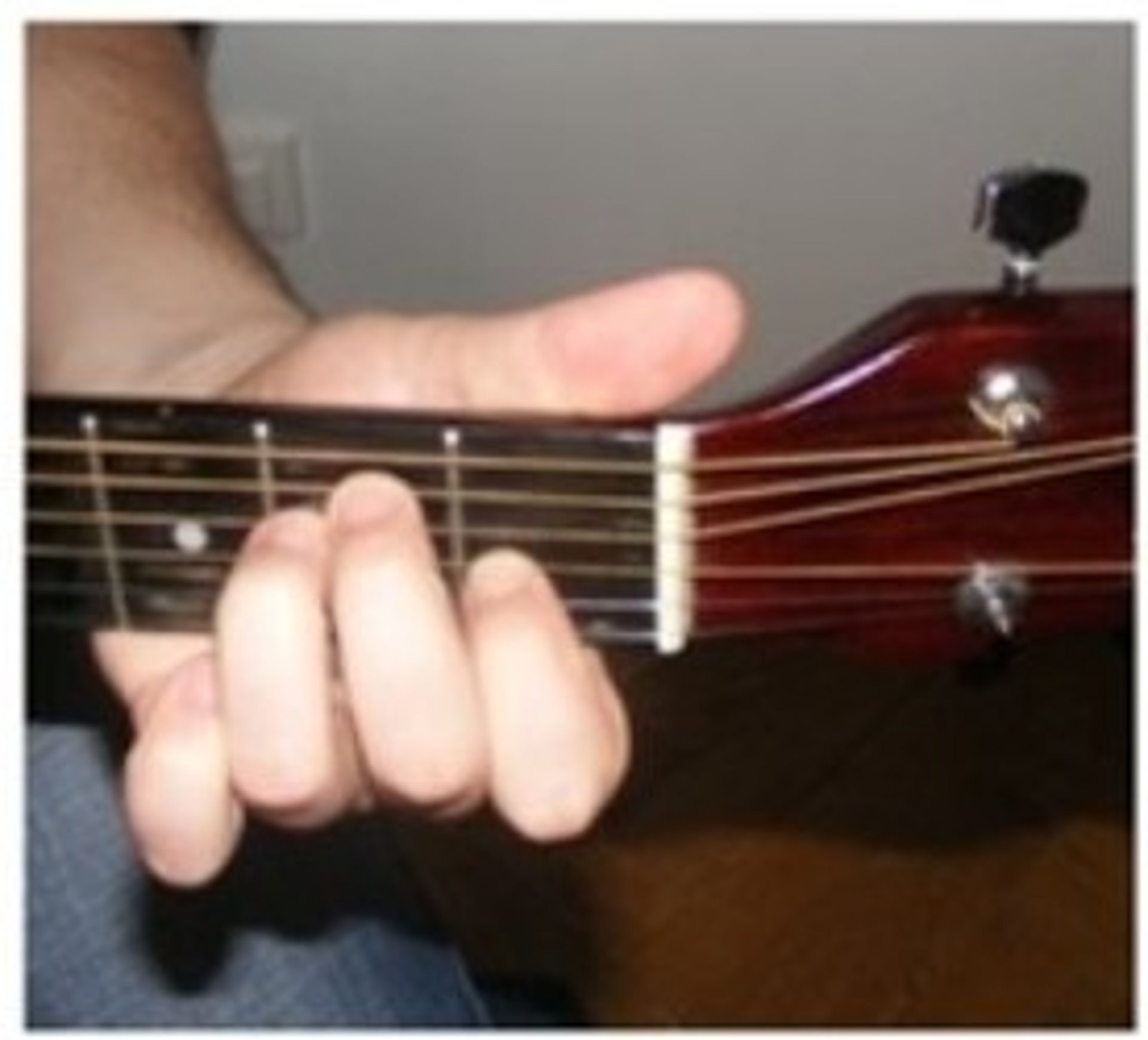
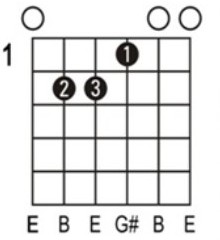
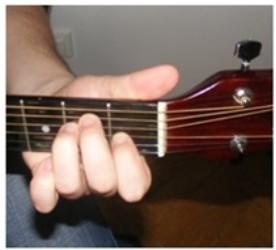
To play the E major chord, place your index finger on the first fret of the third string, your middle finger on the second fret of the fifth string, and your ring finger on the second fret of the fourth string. It’s important to keep your fingers curved and press down using the tips, not the flat parts of your fingers. This prevents neighboring strings from being accidentally muted and allows each note to ring clearly.
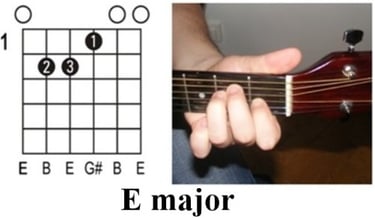
Thumb placement also plays a key role. Position your thumb roughly behind the middle of the neck rather than wrapped over the top. This provides better leverage and reduces tension in your hand. Keep your wrist relaxed and slightly angled, allowing your fingers to approach the strings cleanly.
Another helpful tip is to press the strings just hard enough to produce a clean sound. Pressing too hard can cause unnecessary strain without improving tone. Strum slowly and listen to each string individually to check for clarity, making small adjustments as needed. With consistent practice and mindful finger placement, the E major chord will begin to feel natural. Once mastered, it becomes a reliable foundation for smooth chord transitions and confident rhythm playing across many styles of music.
Learn the E Major Chord Step by Step
Learning the E major chord step by step is an excellent way for beginners to build confidence and develop solid guitar technique. This chord is often introduced early because it sounds full and powerful while using simple finger placement. By breaking the process into clear steps, you can master it with less frustration and better results. Begin by positioning your guitar comfortably, making sure your posture is relaxed. Place your index finger on the first fret of the third string. This finger acts as an anchor and helps guide the rest of your hand into position. Next, place your middle finger on the second fret of the fifth string, followed by your ring finger on the second fret of the fourth string. Keep your fingers curved and close to the fret wires to ensure clean notes.

Once your fingers are placed, check your thumb position. It should rest behind the neck, roughly opposite your middle finger. This provides balance and reduces strain. Strum each string slowly, listening carefully to make sure every note rings clearly. If a string sounds muted, adjust your finger angle slightly rather than pressing harder. After you achieve a clean sound, practice lifting and placing your fingers back into position repeatedly. This builds muscle memory and improves speed. Transitioning in and out of the E major chord with simple shapes like A major or E minor will further strengthen coordination.
Common E Major Chord Mistakes and How to Fix Them
The E major chord is often one of the first chords beginners learn, yet it can still present a few common challenges. Understanding these mistakes and knowing how to fix them helps players achieve a cleaner sound and develop better technique early on. One frequent mistake is muted strings. This usually happens when fingers lie too flat and touch neighboring strings. To fix this, focus on using your fingertips and keeping your fingers curved. Adjust your hand angle slightly so each finger presses straight down without interfering with other strings.

Another common issue is pressing too hard on the strings. Many beginners believe extra pressure improves tone, but it often causes hand fatigue and tension. The solution is to press only as hard as needed for the note to ring clearly. Practicing slowly and listening carefully helps you find the right amount of pressure. Poor thumb placement is another problem. Wrapping the thumb over the top of the neck can limit finger reach and reduce clarity. Instead, place your thumb behind the neck for better support and balance. This position also encourages a relaxed wrist, which is essential for comfort and control.
Beginners also sometimes rush chord changes, causing sloppy transitions. To improve this, practice moving into the E major chord slowly from other chords, like the D major chord. Isolating transitions and repeating them builds muscle memory over time. By addressing these common mistakes with patience and awareness, players can fix problems quickly and develop a clean, confident E major chord that supports smooth playing and long-term progress.
Why Every Beginner Should Master the E Major Chord
Every beginner guitarist should master the E major chord because it builds a strong foundation for both technique and musical understanding. This chord is one of the most commonly used in popular music, appearing in countless rock, pop, blues, and folk songs. Learning it early allows beginners to start playing real music quickly, which boosts motivation and confidence. The E major chord is especially valuable because it uses open strings, producing a full and resonant sound. This helps beginners develop an ear for clean tone and chord clarity. At the same time, its finger placement strengthens coordination by requiring multiple fingers to work together on adjacent strings. These skills transfer directly to other open chords and more advanced shapes later on.


Mastering the E major chord also improves chord transitions. It connects smoothly with chords like A major chord, D major, and E minor, making it ideal for practicing common progressions. This helps beginners develop smoother changes and better rhythm control. The E major chord introduces essential habits such as proper thumb placement, relaxed wrist position, and controlled finger pressure. These habits reduce strain and prevent bad techniques from forming early. Overall, mastering the E major chord gives beginners a reliable, versatile tool that supports faster progress and long-term success on the guitar.
Pro Tips to Learn the E Major Chord Faster
Learning the E major chord faster comes down to smart practice and attention to small details. One of the most effective tips is to focus on finger placement early. Place your fingers one at a time, ensuring each note rings clearly before strumming the full chord. This builds accuracy and prevents bad habits from forming. Another helpful tip is to use the minimum pressure needed to produce a clean sound. Pressing too hard creates tension and slows progress. Practice fretting lightly and adjust only when a note buzzes. Over time, this improves comfort and endurance.
Repetition is key, but it should be done with purpose. Instead of holding the E major chord for long periods, practice lifting your fingers and placing them back down repeatedly. This strengthens muscle memory and speeds up chord formation. Pairing E major with simple transitions, such as moving to A major or E minor, further improves coordination.

Pay close attention to thumb and wrist position. Keeping your thumb behind the neck and your wrist relaxed allows your fingers to move freely and accurately. A tense hand makes learning slower and more frustrating. Finally, practice in short, consistent sessions. Daily practice, even for 10 to 15 minutes, is more effective than long sessions done irregularly. With focused effort and patience, the E major chord will become natural and reliable much faster.
Strumming the E Major Chord with Confidence and Control
Strumming the E major chord with confidence and control is just as important as proper finger placement. Because this chord uses open strings, it responds clearly to changes in strumming intensity, making technique especially noticeable. A relaxed strumming hand is the foundation of a steady and confident sound. Begin by holding the pick loosely between your thumb and index finger. Keep your wrist flexible and allow it to move naturally rather than forcing motion from your arm. Start with slow, even downstrokes to establish consistency and focus on hitting all six strings evenly.

As your comfort grows, introduce simple down-up patterns while maintaining a steady rhythm. Avoid strumming too hard, as excessive force can create harsh tones and reduce control. Instead, aim for smooth, controlled movements that let the chord ring fully. Listening closely to your sound is essential. Adjust your strumming strength to match the mood of the music, whether gentle or energetic. With consistent practice and mindful technique, strumming the E major chord will feel natural, controlled, and expressive.
Smooth Transitions To and From the E Major Chord
Smooth transitions to and from the E major chord are essential for fluid and confident guitar playing. Because E major connects naturally with many common chords, it provides an excellent opportunity to practice clean and efficient movement. The key to smooth transitions is minimizing unnecessary finger motion. Start by identifying anchor fingers that can stay close to the strings during chord changes. Keeping your fingers hovering just above the fretboard reduces travel time and improves accuracy. For example, when moving between E major and A major, focus on shifting your hand as a unit rather than lifting each finger individually.


Relaxation is equally important. Tension in the wrist or hand slows movement and causes sloppy changes. Keep your thumb positioned behind the neck and your wrist slightly bent for better reach and balance. Practice transitions slowly and repeatedly, using a metronome if possible. Gradually increase speed only after the movement feels comfortable. With patience and consistency, transitioning in and out of the E major chord will become smooth, reliable, and effortless.


Useful advices for beginner guitar players 2: Learning guitar often starts with simple exercises and gradually moves toward iconic songs that inspire players to keep going. As skills improve, musicians look for recognizable melodies to challenge themselves and stay motivated. Somewhere in the middle of this journey, many players search for the Metallica – Nothing Else Matters guitar tab to practice fingerpicking, timing, and emotional expression. Working through such a song builds confidence and musicality. Although mistakes happen, consistent practice leads to smoother transitions and better tone. Over time, dedication turns challenging pieces into enjoyable performances that reflect personal growth and passion for music.